
The way we produce and consume energy is changing.
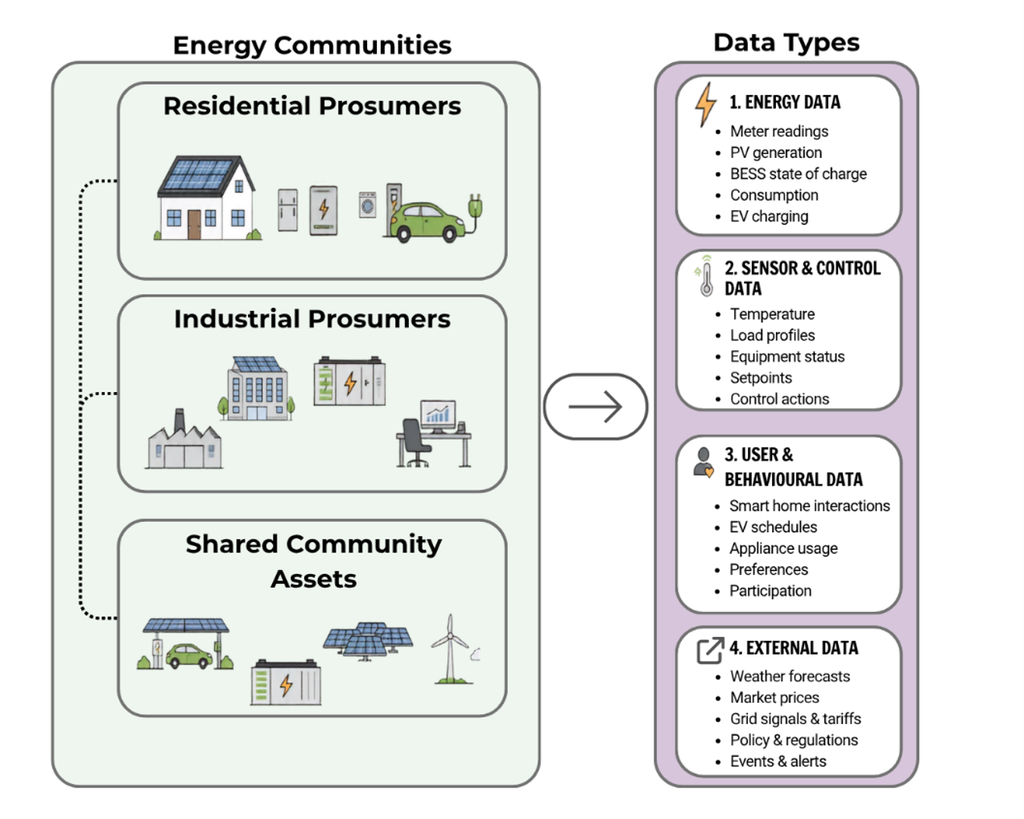
Across Europe, Energy Communities are bringing citizens, local organizations, renewable energy producers, and energy assets together around a more decentralized energy model. Solar panels generate electricity locally, batteries store excess energy, smart meters capture consumption patterns, and flexible assets can adapt their operation according to the needs of the community.
But managing all these resources effectively requires something increasingly important: the ability to understand what will happen next.
How much electricity will the community need in the next hour? How much renewable energy will be available? When should flexible assets consume, store, or release energy?
This is where FLAME – Federated Learning for Adaptive Modeling and Edge Forecasting in Energy Communities comes in.

FLAME is a HEDGE-IoT Open Call Winner, that is developing and validating a new approach to energy forecasting designed specifically for the distributed nature of Energy Communities.
Helping Energy Communities Anticipate What Comes Next
Energy Communities bring together many different sources of information.
One household may have rooftop solar panels. Another may have a battery. Buildings may use flexible HVAC systems, while smart meters continuously record how energy is being consumed and produced.
Together, these resources create an increasingly dynamic local energy ecosystem.
FLAME aims to turn this distributed information into useful short-term forecasts of energy consumption and renewable energy production. The project targets a forecasting horizon of 15 minutes, providing communities with a better understanding of their expected energy needs and available resources.
These forecasts can ultimately support important activities within an Energy Community, including flexibility management, demand-response scheduling, and community-level energy optimization.
Intelligence That Reflects the Community
One of the challenges of Energy Communities is that no two participants are exactly alike.
Homes have different consumption patterns. Solar installations generate different amounts of electricity. Batteries have different capacities. Buildings use energy differently throughout the day.
FLAME is designed around this diversity.
Rather than treating the Energy Community as one homogeneous source of information, the project enables individual nodes to learn from their own historical energy data while contributing to a collaborative forecasting process.
This is achieved through Federated Learning, coordinated by Indigma’s FedMaestro platform.
Local forecasting models can learn directly from data generated by household gateways, PV systems, batteries and HVAC systems. FedMaestro then coordinates the distributed learning process across these different nodes, allowing the community to benefit from collective intelligence while models can still adapt to local characteristics.
From Individual Energy Assets to Community Intelligence
The result is a different way of thinking about AI for energy.
Instead of intelligence being concentrated entirely in a central cloud platform, FLAME distributes part of that intelligence across the Energy Community itself.
The architecture presented in the project connects energy assets → local edge intelligence → federated orchestration → community-level forecasting applications.
This means that smart meters, renewable generation, batteries and other flexible assets become part of a broader intelligent ecosystem in which local knowledge contributes to better forecasts for the community.
For Energy Communities, this can provide the forecasting foundation needed to better coordinate local resources and make more informed decisions about how energy is consumed, produced and managed.
The project is connected to the Portuguese Pilot of HEDGE-IoT, where Indigma will deploy and evaluate the proposed forecasting approach using the infrastructure and datasets made available through the pilot.
Making the Approach Reusable Across Europe
The ambition of FLAME goes beyond a single Energy Community.
Energy Communities can differ significantly in their size, infrastructure, available renewable resources, participants and energy profiles. For new digital technologies to create meaningful impact, they need to be adaptable to these different environments.
For this reason, FLAME aims to create a reusable framework for federated energy forecasting that can be replicated beyond the Portugal.
The project will produce forecasting models, orchestration components, documentation and deployment resources, with project algorithms and supporting material made openly available to encourage further adoption and development.
At the same time, FLAME will extend FedMaestro with capabilities specifically designed for energy forecasting, creating a foundation that can support future deployments in Energy Communities and potentially broader applications across decentralized energy systems.
Towards Smarter, More Adaptive Energy Communities
The transition toward renewable and decentralized energy is not only about installing more solar panels, batteries, and smart meters.
It is also about enabling these resources to work together intelligently.
With FLAME, Indigma is exploring how distributed AI can give Energy Communities better visibility into their future energy needs and renewable production—helping transform collections of individual energy assets into smarter, more adaptive local energy ecosystems.
By bringing together Energy Communities, Federated Learning, Edge AI, and intelligent forecasting, FLAME takes another step toward an energy system where intelligence is as distributed as the energy resources themselves.